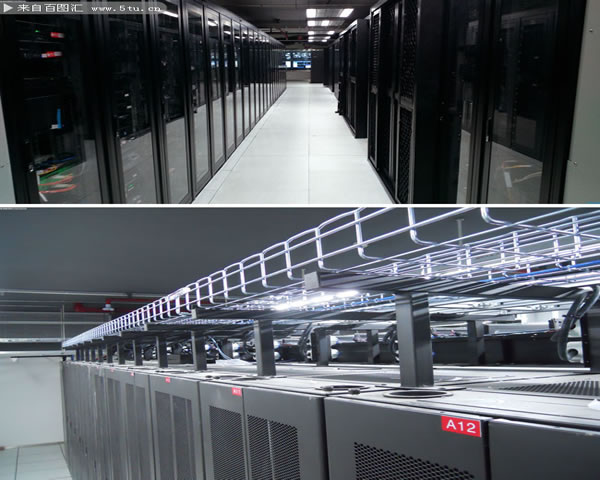
When choosing German server hosting, it is crucial to compare prices and cost-effectiveness across different configurations. This article focuses on “practical methods for comparing the prices and cost-effectiveness of German server hosting under different configurations.” It systematically explains the factors that affect costs, how to establish a unified billing unit, and the steps involved in these practical calculations, aiming to help businesses strike a balance between compliance and performance.
Why bother comparing the prices and cost-effectiveness of German server hosting specifically?
Germany, as a key data center region in Europe, offers advantages related to compliance (such as GDPR), network latency, and local support. Compare prices not only based on monthly fees, but also consider regulatory compliance, latency requirements, and business peak demands. Cost-effectiveness analysis helps avoid the misjudgment of focusing solely on low prices while neglecting operation, maintenance, and availability, thereby reducing long-term total cost risks.
Key factors affecting hosting costs
Hosting costs consist of resource fees (CPU, memory, storage, bandwidth), fixed costs (racks, power, cooling), management services (monitoring, backup, security), and contractual terms (SLA, bandwidth limits). Taxes and value-added services also need to be considered. Understanding the significance of each weight is a prerequisite for establishing comparable models.
How to establish a unified billing unit for comparison
Establishing a unified billing unit includes normalizing costs based on resources: For example, “cost per core per month,” “cost per GiB of memory per month,” “cost per TiB of data transfer per month,” and “cost per TB of storage per month.” By breaking down the total cost of all options into these units, it becomes possible to directly compare the efficiency of resource utilization for different configurations under the same business load.
How to calculate the cost-effectiveness of CPU, memory, and disk
For each resource, the calculation formula is: Unit resource cost = total allocated cost for the resource ÷ quantity of the resource. The allocation can be based on the supplier's quotation or on a market-based average method. It is important to distinguish between the performance differences between SSDs and HDDs, the IOPS requirements, and the maximum capacity that a single instance can handle. All these factors affect the actual cost-performance ratio, rather than just considering the capacity alone.
A comparison of bandwidth and traffic billing methods
Bandwidth costs need to consider both peak bandwidth pricing and billed traffic simultaneously. The commonly used methods are converted into "cost per Mbps per month" and "cost per TB of traffic". Outbound traffic, inbound policy, burst bandwidth, and overflow fees beyond the limit should all be taken into account, especially for traffic-sensitive services, where these factors can quickly determine the overall choice.
High availability, SLA, and the hidden impacts of operational costs
Higher SLAs and redundant designs increase direct costs, but they reduce the opportunity cost associated with downtime losses. During the calculation, it is necessary to estimate the business losses that may result from potential failures and compare them with the increased hosting costs ; At the same time, consider the impact of backup, snapshots, and recovery time objectives (RTO/RPO) on pricing, and strike a balance between risk and cost.
Cost comparison method between hosted physical machines and virtualization/cloud services
Physical hosting is suitable for long-term, stable high loads, while virtualization and the cloud are more flexible and scalable. Comparison should be made using the total cost of ownership (TCO) metric: This includes initial deployment, periodic maintenance, as well as costs associated with manpower and scaling. Determine which model offers better cost-effectiveness in the medium to long term by evaluating savings brought by unit performance cost and elasticity.
The complete calculation process for depreciation, taxes, and TCO
TCO calculation should include equipment depreciation, data center electricity costs, cooling, labor maintenance, network and backup costs, as well as taxes. The steps include: List all cost items, allocate them annually by depreciation, calculate annual operation and maintenance costs, estimate failure risk costs, and sum them up to obtain the annualized or monthly total cost for comparing different configuration options.
Practical comparison processes and decision-making recommendations
Practical process: Clearly define business requirements and peak demands, collect supplier quotations and break them down into uniform units, calculate unit costs for each resource and consolidate into total cost of ownership (TCO), perform sensitivity analysis (for bandwidth fluctuations, failure rate changes), and select the optimal solution with the best cost-performance ratio within budget and acceptable risk levels. TCO and compliance are prioritized for long-term projects.
Summary and Recommendations
Comparing different configurations… German server hosting Practical methods for calculating price and cost-effectiveness should focus on a unified billing unit and total cost of ownership, taking into account SLAs, bandwidth policies, and compliance costs. It is recommended to first quantify business requirements, then use unitization methods to compare multiple solutions, combine sensitivity analysis with risk costs, and finally select a hosted solution that balances performance, compliance, and long-term costs.
- Latest articles
- How To Enhance Data Recovery Capabilities Under German VPS Hosting Through Snapshots And Automatic Backups
- How To Choose An Alibaba Cloud Hong Kong Server VPS To Meet Multi-site Concurrent Access Needs
- Performance Testing Methods For South Korean CN2 Station Clusters: Key Points For Packet Loss Delay And Throughput Evaluation
- Performance Comparison Of The Hong Kong Sha Tin CN2 Host With Other CN2 Nodes On The Market
- Assessing The Speed Of VPS In Vietnam From A Business Perspective And Its Impact On E-commerce And Content Distribution
- In-depth Analysis Of Key Points For Selecting Taiwan CN2 Routes To Help Enterprises Select The Right Connection Channels
- Detailed Guide And Deployment Recommendations On How Corporate Websites And E-commerce Platforms Can Adapt To Hong Kong Server Hosting
- Developer's Guide: What Does Korean VPS Mean? Environment Configuration And Common Compatibility Issues
- Behind-the-scenes Interviews Curated The Charm Secrets Of Thai Variety Show Data Centers
- Key Points Reminder For Enterprise-Level Projects Choosing Singapore Cloud Server CN2 Service Providers
- Popular tags
-

History And Modern Applications Of German Steam Room
Explore the historical background of German steam engine rooms and its application in modern industry, and analyze its impact on energy management and sustainable development. -
A Video Tutorial That Comprehensively Analyzes The Integrated Wiring Of German Computer Rooms
this video tutorial comprehensively analyzes the comprehensive wiring of german computer rooms and provides you with professional computer room wiring knowledge and practical guidance. -

Analysis Of Hidden Costs In Long-term Maintenance Expenses In The Calculation Of German Server Hosting Prices
Analyze the hidden costs of long-term maintenance expenses in the calculation of German server hosting prices, covering factors such as hardware depreciation, software licenses, operational staff, energy, compliance, and disaster recovery, and provide recommendations for internalization.